
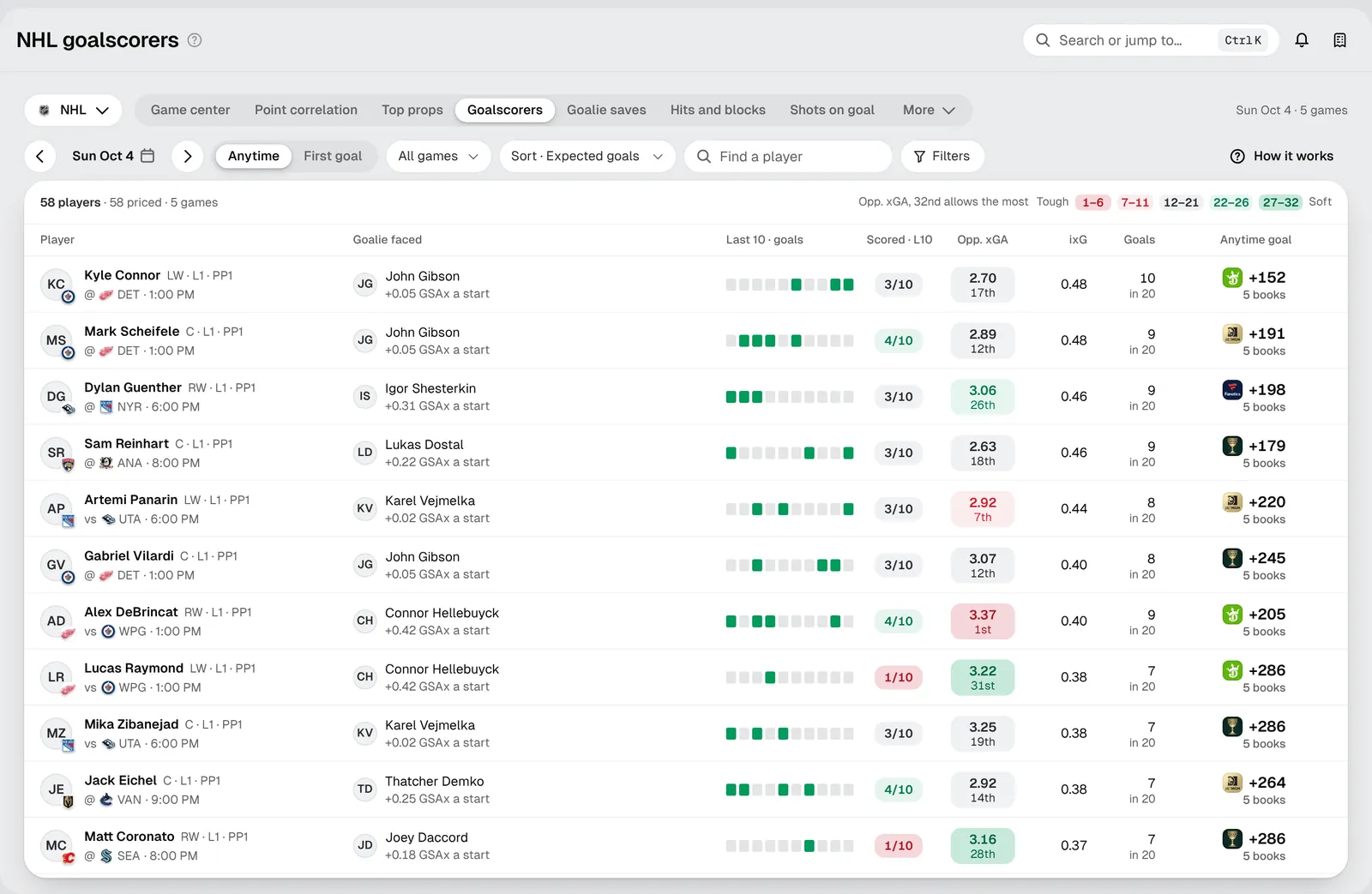
Open Goalscorers. Anytime goalscorer is one of the most popular hockey bets, and one of the hardest to research: even the best scorers find the net in only about a third of their games. This board puts the things that matter on one row: how many good chances a player gets, which goalie they will face, how they've done lately, and the best price.
Anytime or first goal
The switch at the top picks the bet:
- Anytime: the player scores at any point in the game (overtime usually counts; check your book).
- First goal: the player scores the game's first goal. It pays much more because only one player can win it.
Reading a row
- Player: name, position, and their deployment, for example LW · L1 · PP1: left wing on the first line and the first power-play unit. Top-line and PP1 players get the most ice time and the best chances.
- Goalie faced: the projected starter in the other net, with their GSAx a start (goals saved above expected). A positive number means the goalie has been stopping more than an average goalie would; negative means they've been leaking goals.
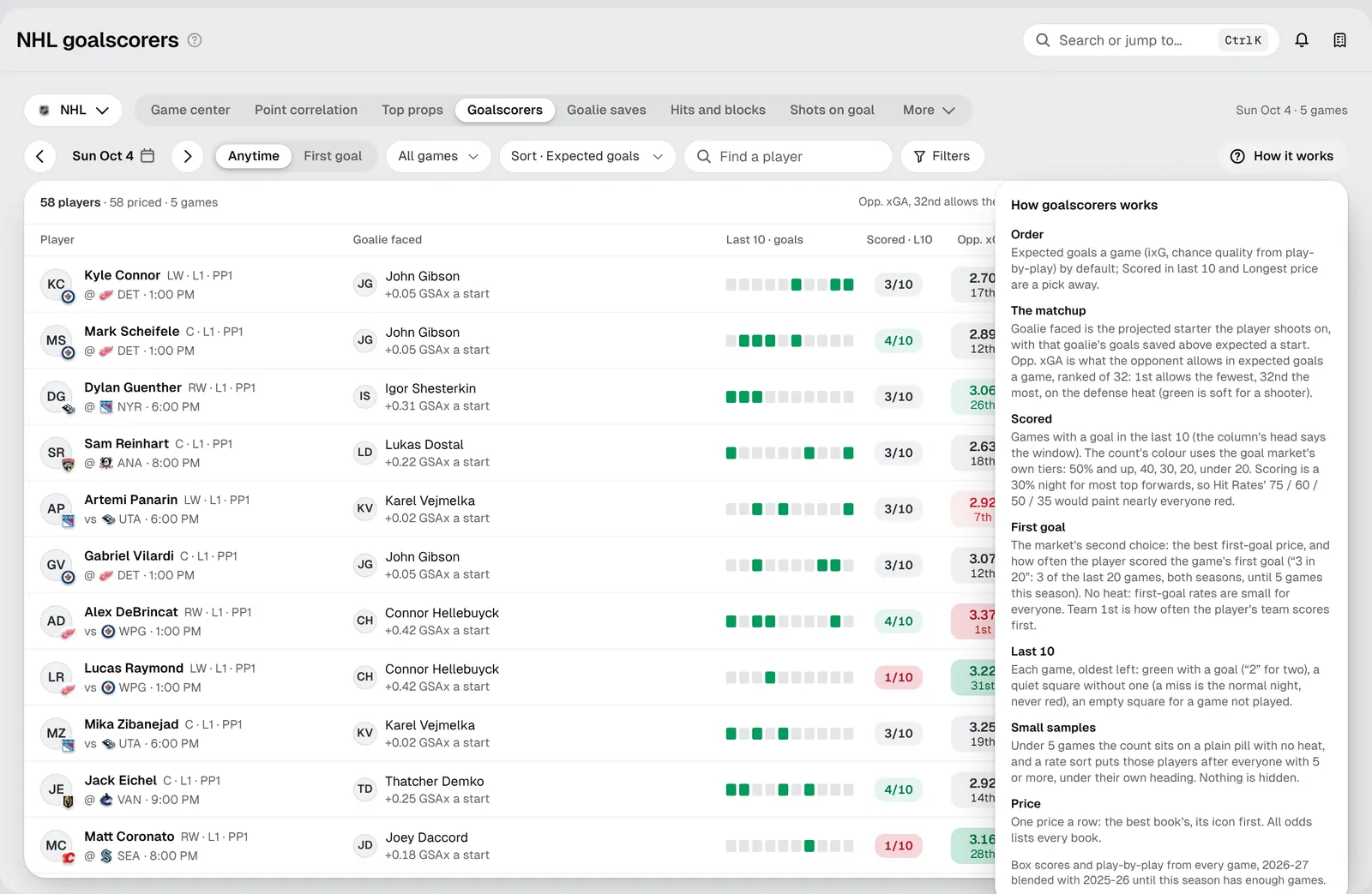
- Last 10 · goals: one square per game, oldest left. Green means a goal ("2" for two). A quiet gray square is a game without one, which is normal for every scorer.
- Scored · L10: games with a goal out of the last 10. The color uses scoring's own scale: 50%+ is excellent, 30% is a normal night for a top forward.
- Opp. xGA: how many expected goals the opponent allows a game, ranked of 32. 32nd allows the most, which is green (a soft defense for a shooter).
- Price: the best anytime price and the book offering it. All odds lists every book.
Your first five minutes
- Pick the date. The arrows and calendar step through slates.
- Pick a game. All games narrows to the matchups you care about.
- Sort. The board orders by Expected goals (ixG), a measure of shot quality from play-by-play. Scored in last 10 and Longest price are a pick away in the sort menu.
- Check the goalie. The projected starter matters more than almost anything else. Goalies are projected, not confirmed, until warmups.
- Open a player. Click a row for their full shooting profile and every book's price.
First goal, explained
On First goal the board shows the best first-goal price and how often the player scored the game's first goal, for example "3 in 20": 3 of the last 20 games. Team 1st is how often the player's team scores first. First-goal rates are small for everyone, so the sheet doesn't color them.
Tips for newer bettors
- Expect to lose most nights. A 30% scorer at +250 can still be a fair bet, but they will miss most games. Bet amounts you're comfortable losing several times in a row.
- Chances beat streaks. A player getting lots of good chances (high ixG) who hasn't scored lately is often a better bet than a hot player who has been lucky.
- Watch the power play. PP1 players score a big share of their goals with the man advantage. Teams that draw penalties help.
- Pair it. If you like a scorer, Point correlation shows which teammate usually gets the assist.
Troubleshooting
- A player has no price: no book is posting their anytime line right now.
- The goalie looks wrong: projections update through the day. Check again closer to puck drop.
- A small sample: with fewer than 5 games, the count sits on a plain gray pill and sorts after everyone else, under its own heading.
Plan availability: Goalscorers needs Scout. A free account sees the first 5 rows. See plans.